
Book a demo →
PricingBlog

About Future Stars

Every academy can see what he does with the ball. We show what he does after he loses it.

A development record that follows a player from the academy to the transfer, built from what his coaches already see and what he says about his own week.

01   About us

Every kid deserves to find out how far they can grow.

Academy directors spend hours every week managing parent anxiety instead of developing players. The information that would settle those conversations exists already, in the heads of the coaches who watch these kids every day, and it disappears at the end of every season.

We are building the record that does not disappear.

Players70%quit organized sport by thirteen.
Directors5 to 10ha week spent managing parent anxiety.
Parents$1K to 100Ka year, invested in a career nobody is measuring.

Dropout figure: Aspen Institute Project Play. The other two are what academy directors and families tell us.

02   Our story

Where this started.

A coach told my six year old he had no talent. After his very first lesson.

His first academy treated parent questions as an inconvenience. He made the national squad at eleven, not because the system worked, but because he was stubborn enough to outlast it.

Most kids are not.

The decade before this I built a retention technology company. My whole job was working out why people stay with something, what brings them back, and what quietly makes them leave. Then I looked at youth sport, which loses seventy percent of its kids by thirteen, and found nobody measuring any of it.

Andras Nemes, co-founder and CEO of Future Stars
Andras Nemes, Co-Founder and CEO

03   Our approach

Making the invisible visible.

Every academy can see what a player does with the ball. Almost none can see what he does after he loses it: how he handles pressure, where his focus goes, whether he takes the risk, how long a mistake stays with him.

None of that is new information to a club. Its coaches see it every week. What is new is that it survives the season, measured the same way every month, so a player can be read against his own history instead of against somebody else’s.

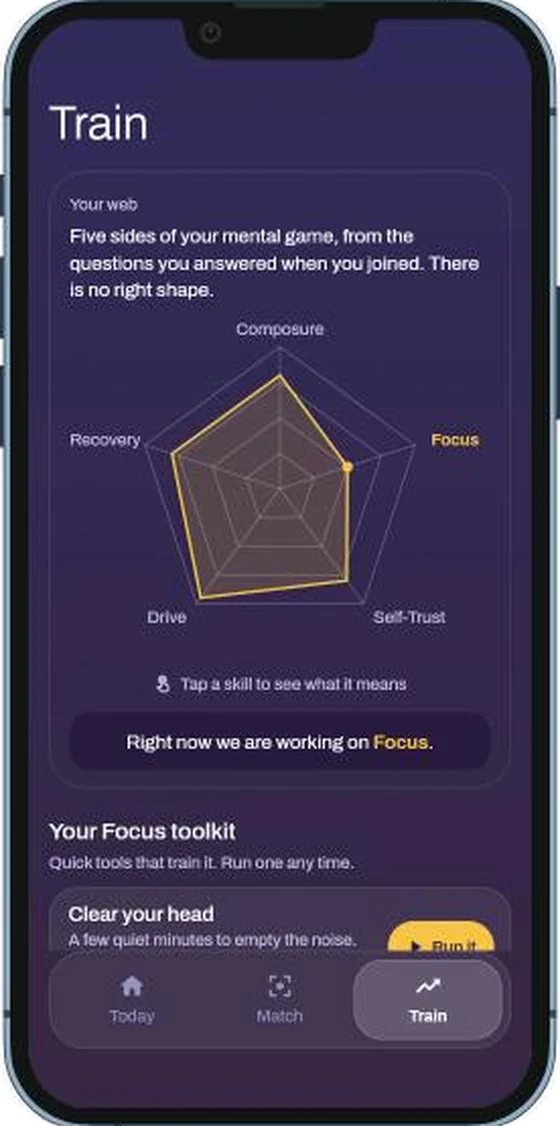
A player’s five traits drawn as a shape, readable against his own earlier one

04   Why we exist

A record is worth more than an opinion.

When a club sells a player, the buying club asks what he is like when it goes wrong. Today that answer is whoever's opinion is in the room. With a record it is three seasons of the same measurement.

When a club decides who stays, biological maturity sits next to the technical picture, so a late developer is not mistaken for a limited one.

And when a coach faces a parent, he has three tracked values and a written note instead of a defense.

An opinion changes with whoever is in the room. A record does not.

05   Who builds it

Who you would be working with.

Andras NemesCo-Founder and CEO

Took Antavo from zero to nine million dollars in annual revenue, with the United States Tennis Association among its customers.

LinkedIn
Istvan VinczeCo-Founder, Product

Previously at Drops, acquired by Kahoot.

LinkedIn

We started in tennis and have since rolled out in soccer.

06   Next

Twenty minutes, and you will know whether this fits your club.

Nothing to prepare. Bring one age group and we will show you what the first month would surface.